Turning user research into a wallet built for gamers
Client
Letting research pick the product
Year
2023
We didn't want to bet the company on a hunch, so we went and asked what crypto was actually missing.
Working with the founders, I ran the interviews and designed the product: first a wallet built entirely around trust, then, when the research pointed to a rising crypto-gaming crowd, a version made for them.
Scope of Work
01 Context
Solvo was a small crypto startup with a live mobile app aimed at getting newcomers into crypto. In a crowded, fast-moving market, the team, the CEO, the CTO, and me, was trying to work out where to actually play. Rather than guess, we went looking for the answer.
02 Problem
The challenge
Crypto in 2023 was crowded and full of broken trust. A small team could not afford to spend its runway building something people did not want, and the direction so far was based on hopes, not evidence.
Why it mattered
In this market, trust is everything, and a wrong bet can finish a small startup. We needed to know what people actually needed before we built it.
In a market this crowded, the most expensive mistake is building the wrong thing.
How I found the real problem
The CEO and I ran interviews across three groups: experienced crypto users, everyday people, and other founders. The same answer kept coming back. What was missing was a wallet people could actually trust.
03 Impact
The research set the direction. The interviews pointed the team to a real opportunity, a trustworthy wallet, instead of a guess.
They also found the audience. The same conversations surfaced a fast-growing crypto-gaming crowd, and the team decided to aim the wallet at them.
The gamer direction tested well. In testing, that version showed a 40% lift in engagement and 35% better retention.
I ran the research and designed the product; the decision to build the wallet, and to aim it at gamers, was the team's, based on what the research showed. Qubit never launched, so the 40% and 35% are from testing, not production, and I label them that way.
04 Direction
With the research pointing one way, the team committed to it:
Build the wallet people asked for, one that feels safe above all else, and aim it at the crowd most ready to adopt it: crypto gamers.
What that meant in the design
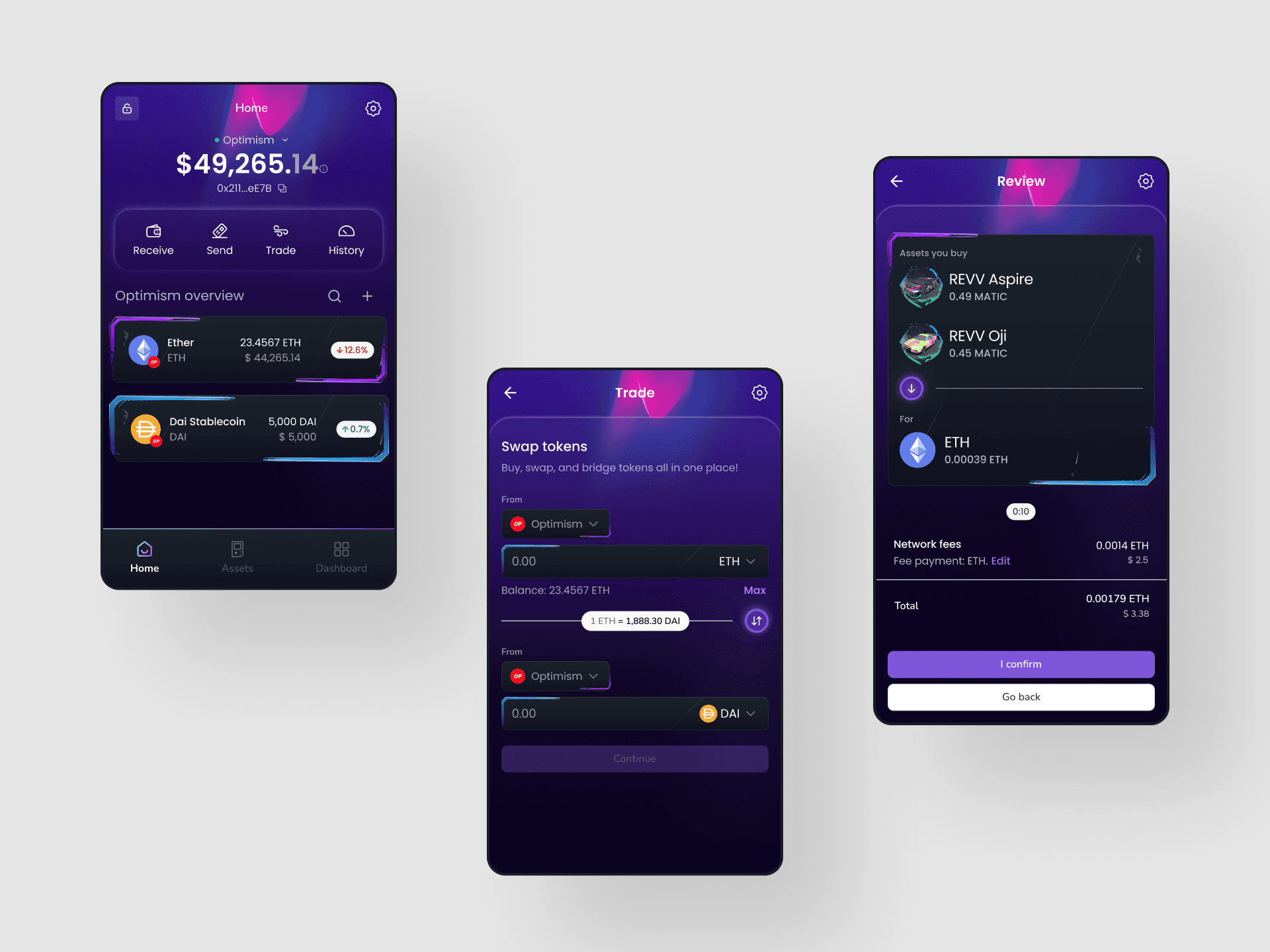
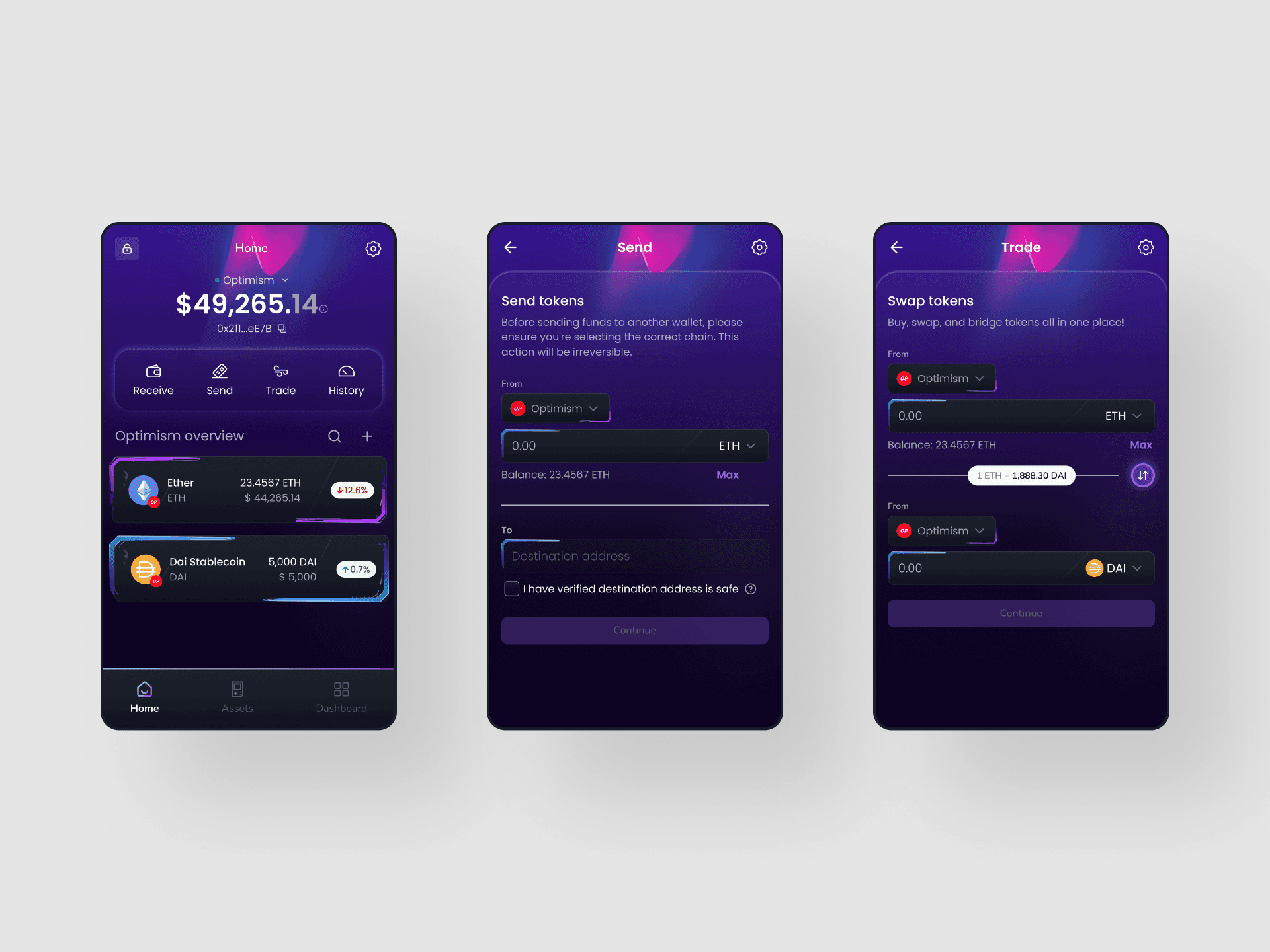
It played out in two stages. The first version was built to look and feel as secure as possible, calm, consistent, no surprises. Then, once the research showed crypto gaming taking off, I reworked the UI language to feel like a game, so that audience felt at home.
05 Approach
What I owned
The user research, run alongside the CEO, and the product design and branding. I did not set the company's strategy on my own. My job was to find what users needed and turn it into a product.
How I worked
Interviews first, across three very different groups, to find the real gap. Then designing the secure-first wallet. Then, as the gaming trend surfaced in the research, reworking the whole UI toward that audience.
06 Execution
Designing a wallet that feels safe
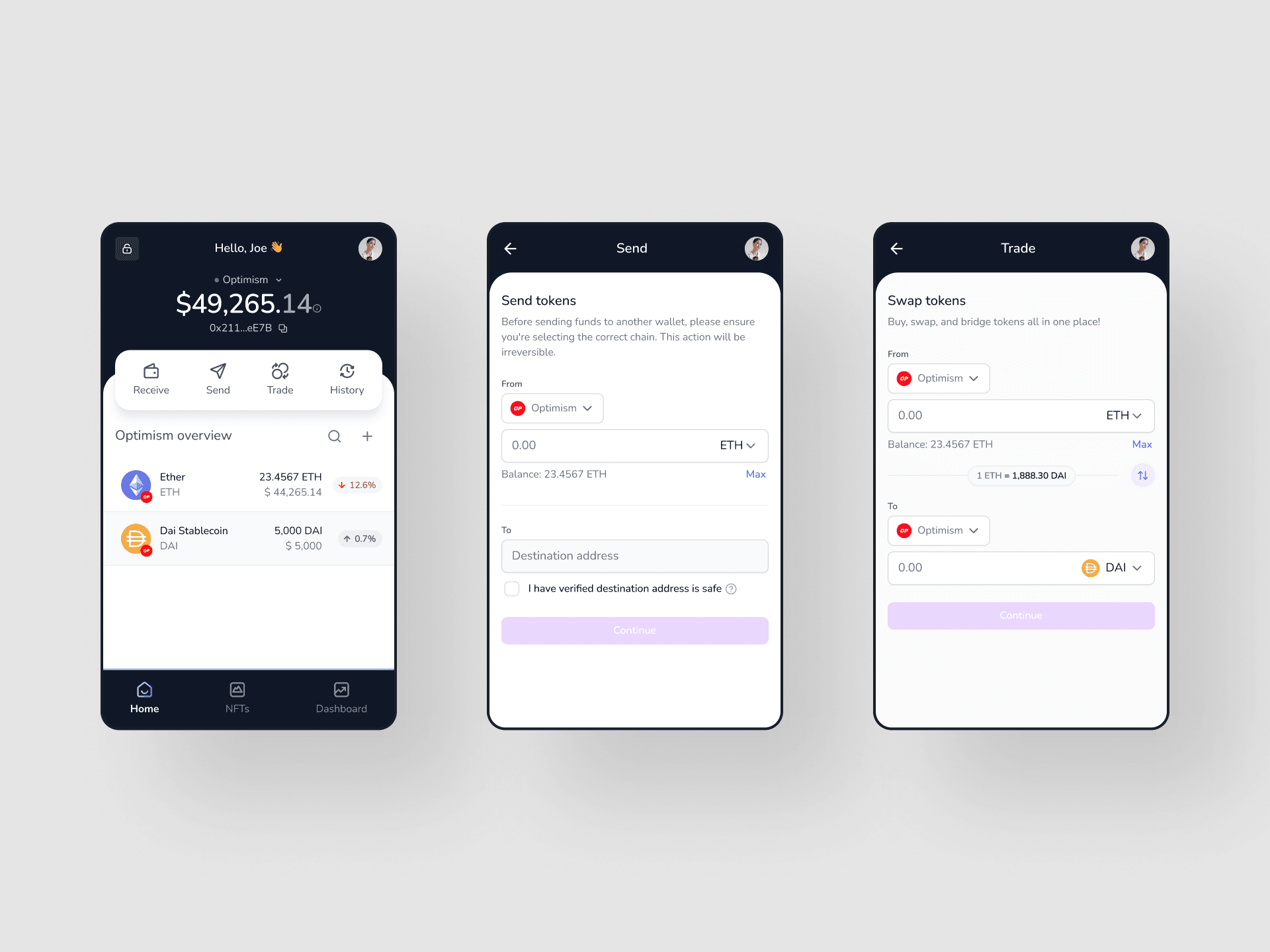
The first version was built to feel reliable on sight: consistent components, no jarring surprises, the kind of visual calm that tells people their money is in good hands. In crypto, that feeling is the product.
Speaking the gamer's language
When the research showed crypto gaming rising, I reworked the naming and visual cues to echo gaming interfaces, so that community felt at home instead of lost. Familiar on purpose, so the leap into crypto felt small.
07 Reflection
What worked
Asking before building. A few rounds of interviews were enough to steer a small team onto something people actually wanted, instead of a hunch.
What I'd do differently
Get it to market to prove it. We validated in testing, but Qubit never launched, so the strongest proof, real adoption, is missing.
Transferable insight
The cheapest, most valuable thing a team can do is ask users first. Research that points the direction early beats any amount of polish later.